

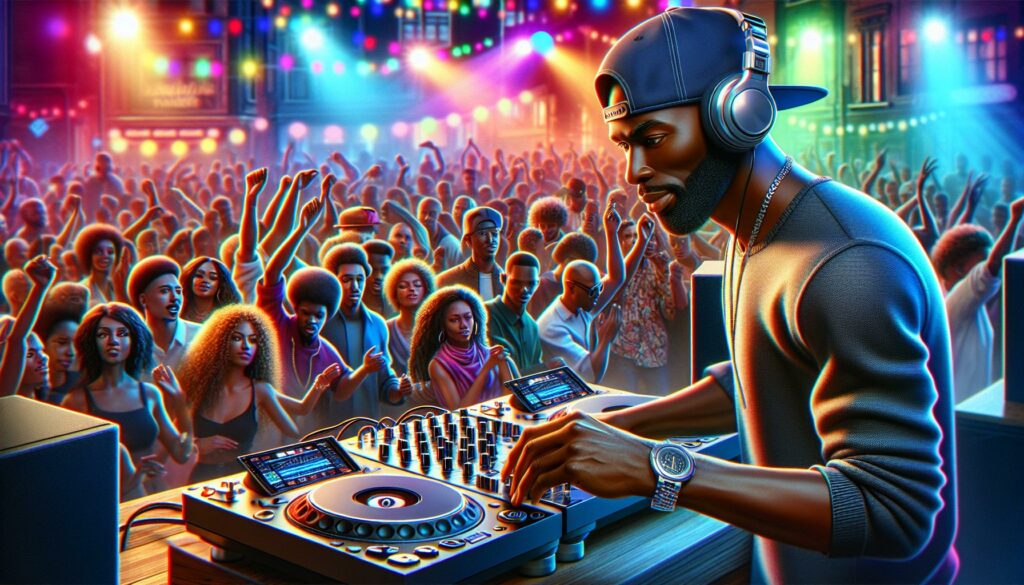
Deejaying stands at the heart of hip-hop culture as one of its foundational elements. Born in the streets of the Bronx during the 1970s this innovative art form transformed simple turntables into powerful instruments of musical expression. DJs became the architects of hip-hop’s signature sound by manipulating records creating new rhythms and engineering groundbreaking beats.
The art of hip-hop deejaying goes far beyond just playing records. It’s a complex craft that requires technical skill creative vision and an deep understanding of music theory. From scratching and beat juggling to sample selection and mixing DJs craft sonic landscapes that serve as the backbone for rappers and dancers alike. This revolutionary approach to music manipulation has influenced countless genres and continues to shape the evolution of modern music production.
The Origins of Hip Hop DJing
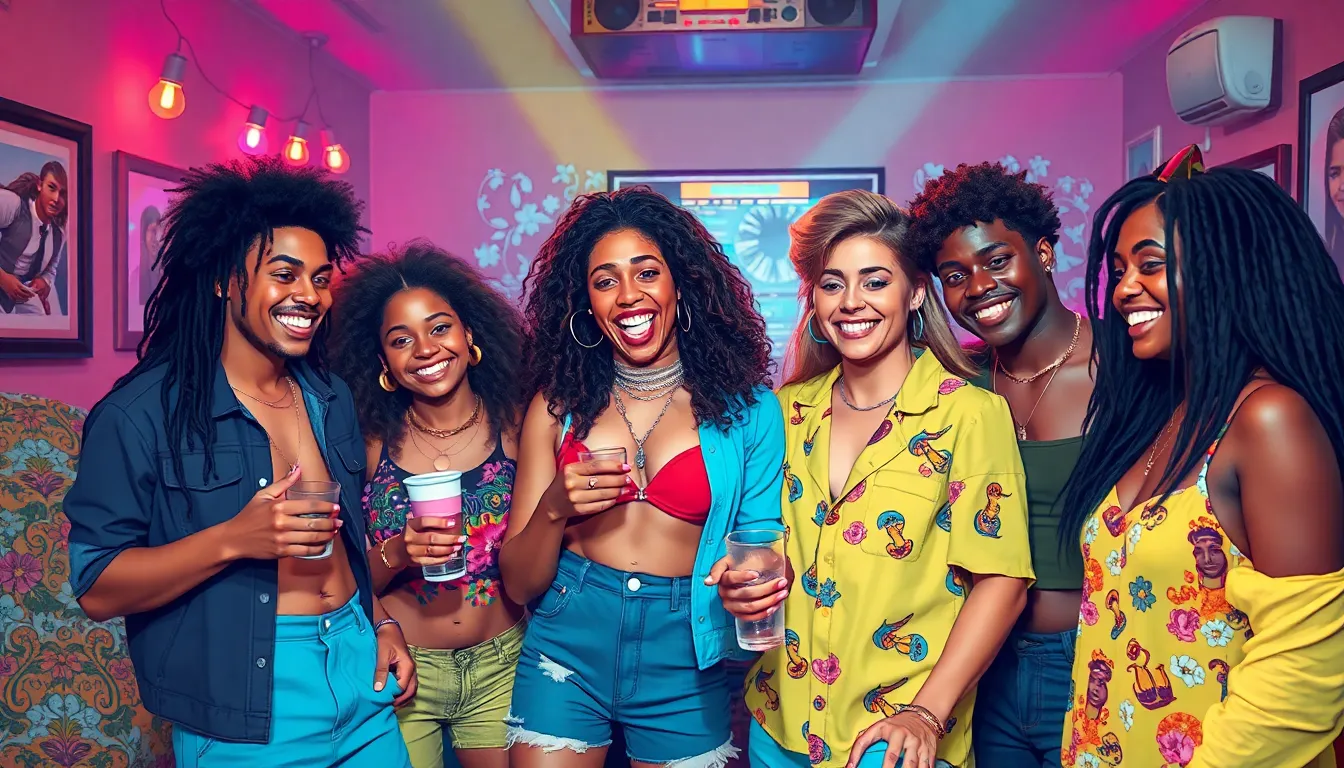
Hip hop DJing emerged in the South Bronx during the early 1970s through block parties and community gatherings. DJs transformed basic audio equipment into innovative tools for creating new sounds through experimentation with vinyl records.
Pioneers of Turntablism
DJ Kool Herc introduced the “Merry-Go-Round” technique in 1973, extending instrumental breaks by using two copies of the same record. Afrika Bambaataa expanded hip hop’s musical palette by incorporating diverse genres like electronic music, funk, and African rhythms. Grandmaster Flash developed technical innovations including punch phrasing, backspinning, and cutting, establishing foundational DJ techniques.
Key Turntablism Pioneers:
| Pioneer | Year Active | Notable Contribution |
|---|---|---|
| DJ Kool Herc | 1973-1977 | Merry-Go-Round technique |
| Afrika Bambaataa | 1977-1982 | Genre fusion mixing |
| Grandmaster Flash | 1975-1980 | Quick-mix theory |
The Birth of Breakbeat DJing
Breakbeat DJing originated from isolating drum breaks in funk records like The Incredible Bongo Band’s “Apache” and James Brown’s “Funky Drummer.” Early practitioners developed these techniques:
- Extending breaks by alternating between two copies of records
- Marking specific points on vinyl records for precise cueing
- Creating continuous drum loops through manual manipulation
- Matching tempos between different records using pitch control
- Isolating specific instrumental sections for extended play
| Element | Function |
|---|---|
| Manual Cueing | Precise break selection |
| Beat Matching | Tempo synchronization |
| Loop Creation | Extended break sections |
| Break Isolation | Drum pattern focus |
Essential DJ Equipment and Setup
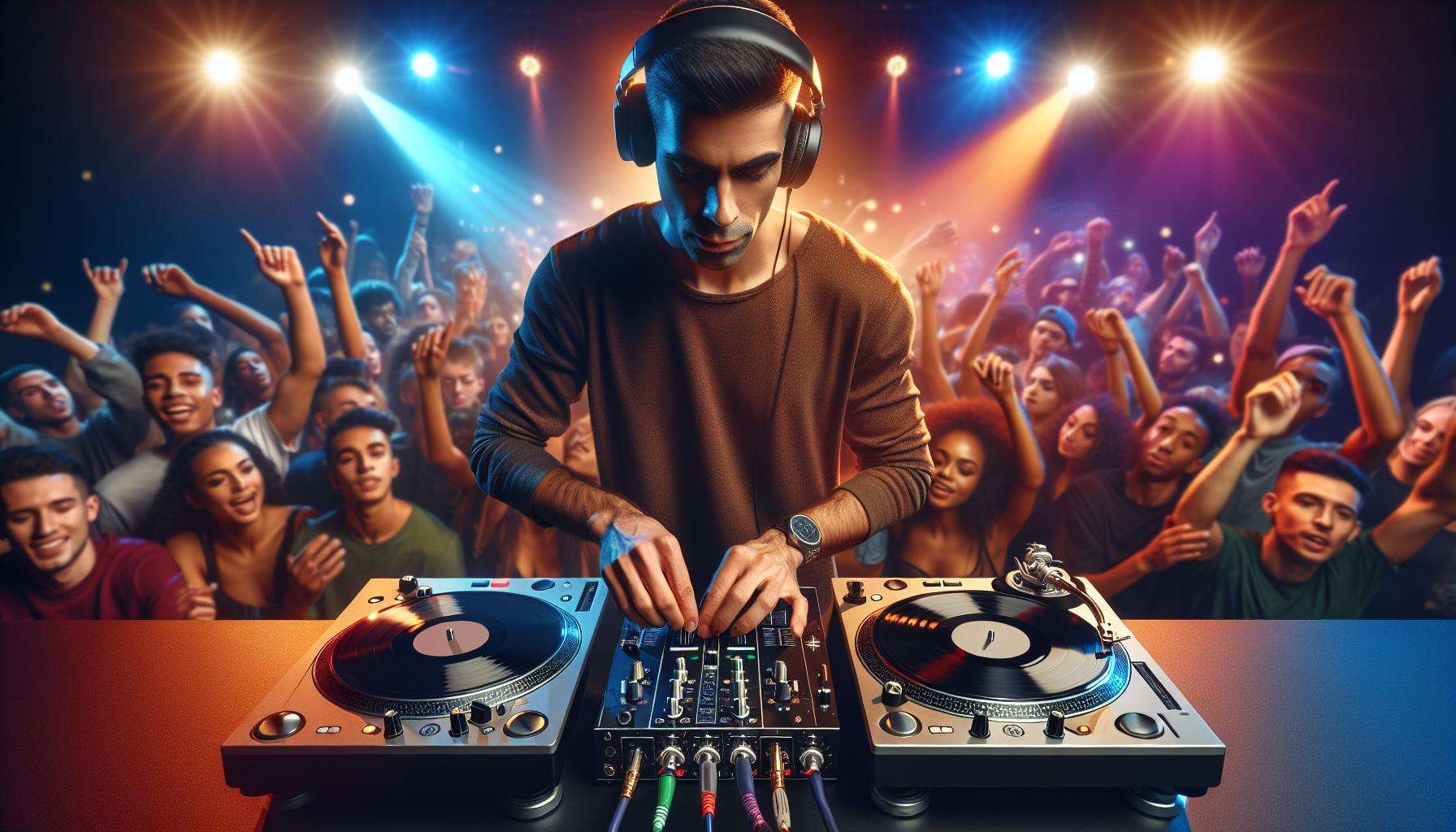
Hip-hop DJs require specific equipment to create, mix and manipulate music effectively. The essential setup combines traditional analog gear with modern digital technology to achieve professional sound quality and creative flexibility.
Turntables and Mixers
Professional hip-hop DJs use direct-drive turntables with high torque motors, such as the Technics SL-1200 series. A standard setup includes:
- Two turntables equipped with slip mats for smooth record manipulation
- A 2-channel mixer with crossfader controls adjustable curve settings
- High-quality phono cartridges rated at 2-5 grams tracking force
- RCA cables with gold-plated connectors for optimal signal transfer
- Battle-style mixer placement with turntables at 90-degree angles
- DJ controllers with touch-sensitive jog wheels mapping to virtual turntables
- Digital audio workstations like Serato DJ Pro Virtual DJ or Rekordbox
- USB drives containing music libraries in 320kbps MP3 or WAV formats
- MIDI controllers with assignable buttons pads encoders for effects
- Audio interface units with balanced XLR outputs for club systems
| Equipment Type | Typical Price Range (USD) | Essential Features |
|---|---|---|
| Turntables | $500-2,000 | Direct drive, pitch control |
| DJ Mixer | $300-2,500 | 2-4 channels, effects |
| Controller | $200-3,000 | Jog wheels, pad triggers |
| Software | $99-299 | Beat detection, library management |
Core Hip Hop DJ Techniques
Hip hop DJs employ specialized techniques to create dynamic performances and manipulate music in real-time. These fundamental methods form the backbone of hip hop DJ culture and require precise timing with manual dexterity.
Beat Matching and Mixing
Beat matching aligns the tempo of two tracks to create seamless transitions between songs. DJs accomplish this by:
- Adjusting the pitch control to match BPM (beats per minute)
- Monitoring track alignment through headphone pre-cueing
- Using the crossfader to blend tracks at precise moments
- Creating extended instrumental sections for MCs or dancers
Scratching and Beat Juggling
Scratching transforms the turntable into a musical instrument through vinyl manipulation. Common scratch techniques include:
- Baby scratch: Moving the record back and forth in a simple pattern
- Transformer scratch: Rapidly cutting the sound on/off with the crossfader
- Orbit scratch: Combining forward and backward record movement
- Crab scratch: Using multiple fingers to create rapid crossfader cuts
Beat juggling involves:
- Playing identical copies of a record on two turntables
- Isolating specific sounds or beats
- Creating new rhythmic patterns through manual manipulation
- Extending breaks through coordinated crossfader control
- Loop creation from short segments of existing tracks
- Pitch shifting to alter the tone and tempo of samples
- Layering multiple samples to create new compositions
- Isolating specific instrumental elements (drums, bass, vocals)
- Using effects processors to modify sound characteristics
| Technique | Skill Level | Practice Time Required |
|---|---|---|
| Beat Matching | Beginner | 2-3 months |
| Basic Scratching | Intermediate | 6-12 months |
| Beat Juggling | Advanced | 12-24 months |
| Complex Sample Manipulation | Expert | 24+ months |
The Role of the DJ in Hip Hop Culture
Hip-hop DJs serve as cultural architects who shape the sonic landscape of the genre. Their influence extends beyond music manipulation to include community building cultural preservation.
From Block Parties to Stadiums
The evolution of hip-hop DJing transformed from intimate block parties to massive stadium performances. South Bronx block parties in the 1970s featured DJs like Kool Herc operating simple sound systems for 300-500 people, while modern hip-hop DJs perform at venues like Madison Square Garden for crowds of 20,000+. Notable transitions include:
- Moving from analog equipment to hybrid setups incorporating digital interfaces
- Expanding from local community gatherings to international festival circuits
- Transitioning from basic PA systems to complex audio arrangements
- Adapting techniques from intimate spaces to large-scale production environments
Working With MCs and Producers
DJs collaborate with MCs and producers to create cohesive hip-hop compositions. Their partnerships include:
- Providing instrumental breaks for MCs to rap over during live performances
- Creating custom mixtapes featuring exclusive MC vocals
- Contributing to production sessions with specialized turntable techniques
- Developing signature sounds through:
- Custom beat juggling patterns
- Unique scratch combinations
- Personalized mixing styles
| DJ-MC Partnerships | Year Formed | Notable Projects |
|---|---|---|
| DJ Jazzy Jeff & Fresh Prince | 1985 | “He’s the DJ, I’m the Rapper” |
| Eric B. & Rakim | 1986 | “Paid in Full” |
| DJ Premier & Guru | 1989 | “Gang Starr” |
Modern Hip Hop DJing
Modern hip-hop DJing combines traditional vinyl techniques with digital technology innovations. This fusion creates versatile performance capabilities while maintaining the cultural essence of classic hip-hop DJing.
Digital vs. Analog Approaches
Digital DJing platforms provide expanded creative options through software like Serato DJ Pro Virtual DJ. Modern DJs integrate digital features including:
- Hot cues for instant track navigation
- Loop engines for extended beat manipulation
- Effects processors with real-time parameter control
- Digital music libraries with instant track access
- MIDI controllers for tactile parameter adjustments
Traditional analog setups maintain relevance through:
- Pure vinyl sound quality characteristics
- Direct physical interaction with records
- Authentic scratch response timing
- Natural audio signal path
- Hardware reliability without computer dependence
| Equipment Type | Digital Features | Analog Features |
|---|---|---|
| Controllers | 8+ hot cues | Physical pitch faders |
| Mixers | Built-in effects | Direct signal routing |
| Storage | 1000+ track libraries | 2 active vinyl records |
| Processing | 24-bit/96kHz audio | Pure analog signal |
Live Performance Elements
Modern hip-hop DJs incorporate multiple performance elements to engage audiences:
- Real-time remixing using stems tracks
- Live sampling with drum machines
- Acapella layering over instrumental tracks
- Effect chains synchronized to beats
- Visual elements through projection mapping
Performance integration techniques include:
- Hybrid setups combining turntables with controllers
- Synchronized lighting systems
- Live instrument collaborations
- Mobile device control interfaces
- Recording capabilities for instant track capture
- DVS systems for time-coded vinyl control
- Multi-channel audio interfaces
- Performance pad sections
- Touch-sensitive platters
- Modular effect routing options
Hip-hop DJing stands as a cornerstone of hip-hop culture that continues to evolve while honoring its roots. From its humble beginnings in the Bronx to today’s digital revolution DJs have shaped the sound and spirit of hip-hop through innovative techniques and unwavering dedication to their craft.
The art form remains vibrant as modern DJs blend traditional vinyl manipulation with cutting-edge technology. This fusion ensures that hip-hop DJing stays true to its foundational elements while embracing new possibilities for creative expression. The legacy of pioneering DJs lives on through countless artists who continue to push boundaries and inspire future generations.