



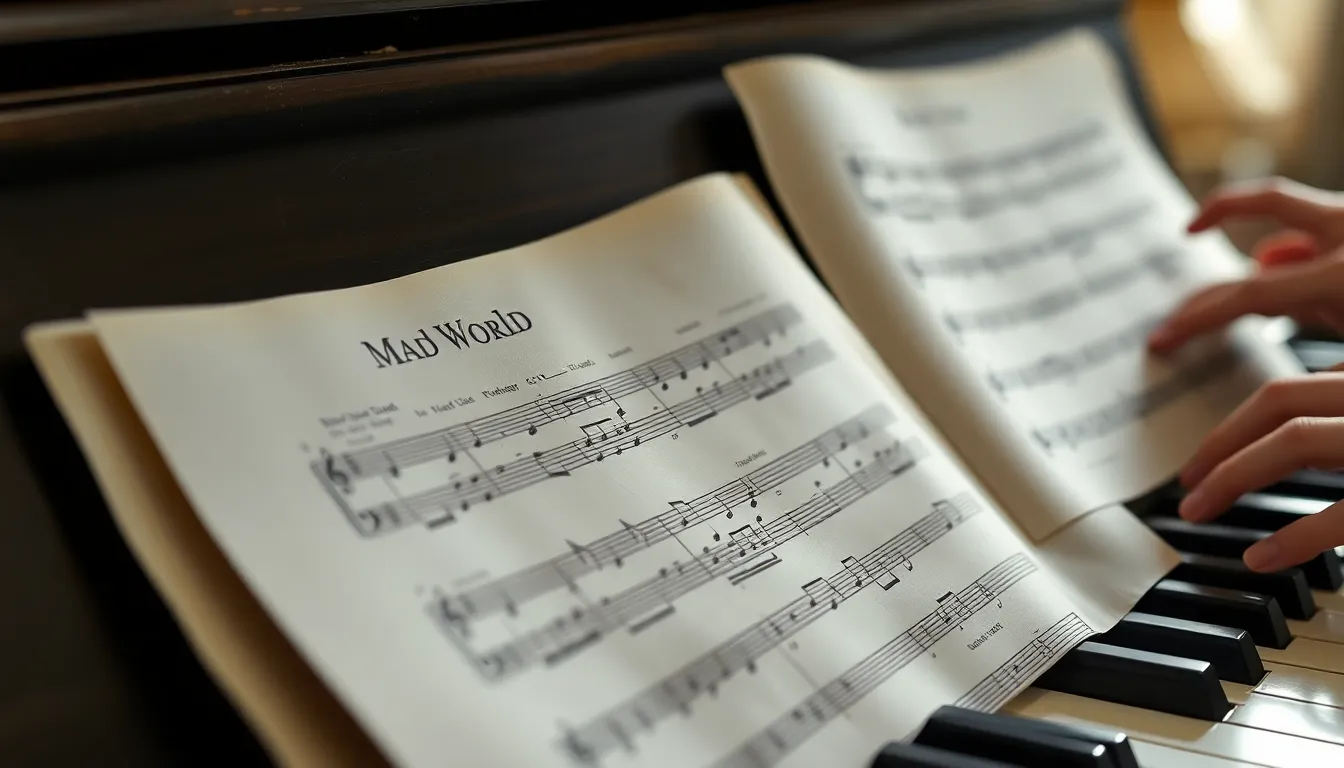


In a world that often feels upside down, the haunting melody of “Mad World” strikes a chord with many. This iconic song has captured hearts and minds, making it a must-have for musicians looking to evoke deep emotions. Whether you’re a seasoned pianist or a beginner just trying to impress your cat, the right sheet music can transform your playing from average to absolutely mesmerizing.
Overview of Mad World
“Mad World” captures a unique blend of melancholy and beauty. Originally written by Roland Orzabal of Tears for Fears, the song gained widespread acclaim after Gary Jules’ haunting rendition in 2001. This version resonated deeply with audiences, further solidifying its status as an anthem for introspection.
Sheet music for “Mad World” is crucial for musicians striving to express its emotional depth. Choosing the right arrangement can enhance the performance’s atmosphere, allowing musicians to convey the song’s nuanced themes. Several versions of sheet music exist, catering to different skill levels. Beginners might prefer simplified arrangements, while advanced musicians can explore intricate chords and melodies.
The song’s lyrical content delves into feelings of disconnection and existential contemplation. These themes become more pronounced through carefully selected sheet music. Musicians often find that the tempo, dynamics, and articulation instructions within the sheet music significantly impact their interpretation.
Incorporating expressive techniques such as rubato can further elevate the performance. Many musicians utilize the sheet music to experiment with variations, allowing personal touches to emerge. The emotional resonance of “Mad World” often hinges on these artistic choices.
History of the Song
“Mad World” showcases a rich history marked by emotional depth and artistic expression.
Songwriters and Composition
Roland Orzabal wrote the song for Tears for Fears, infusing it with a unique blend of melancholy and introspection. Lyrics explore feelings of disconnection and existential reflection. Orzabal’s composition features simple yet striking melodies that enhance the emotional quality. Originally released in 1982 on the album The Hurting, the song quickly gained attention. The arrangement allows for various interpretations, making it a favorite for musicians. Effective use of tempo and dynamics plays a crucial role in delivering the emotional weight of the piece.
Evolution of the Song
The song evolved significantly over the years, gaining new meanings with each rendition. Gary Jules popularized it with a haunting piano cover in 2001, bringing a fresh perspective. This version topped charts worldwide and introduced “Mad World” to a new generation. Many artists have since covered the song, applying individual styles that contribute to its timeless appeal. The continuous reinterpretation reflects ongoing societal themes, resonating deeply with listeners. Each arrangement showcases distinct emotional nuances, allowing musicians to explore diverse artistic expressions.
Popular Versions of Mad World
The song “Mad World” has seen various interpretations that highlight its emotional depth and universal significance. Each version offers a unique take on the original, expanding its reach across different genres and audiences.
The Original Version
Roland Orzabal of Tears for Fears composed the original version, featuring a simple yet powerful melody. Released in 1982 on the album The Hurting, this version immediately resonated with listeners, addressing themes of alienation and despair. The straightforward arrangement allows musicians at any skill level to connect emotionally with the song. Orzabal’s vocals combined with evocative instrumentation set the stage for future renditions, establishing “Mad World” as a poignant anthem of introspection.
Notable Covers
Gary Jules’ 2001 cover is perhaps the most recognized reinterpretation. This haunting rendition stripped the song down to its core, highlighting its emotional vulnerability. Jules’ piano-driven arrangement contrasts with the original’s 1980s synth-pop sound, making it accessible to contemporary audiences. Other notable covers include versions by artists like Adam Lambert and the cast of Glee, who each bring their own stylistic elements. Such diverse interpretations enable musicians to explore distinct emotional nuances, showcasing the song’s versatility while resonating deeply with fans.
Where to Find Mad World Sheet Music
Musicians searching for “Mad World” sheet music can explore various avenues, both online and offline. Finding the right arrangement tailored to skill level enhances the performance experience.
Online Resources
Numerous websites offer a wealth of options for downloading or purchasing sheet music. Platforms like MusicNotes and Sheet Music Plus provide arrangements for various instruments, catering to both beginners and advanced musicians. Additionally, many digital formats include interactive features, making learning easier. Online communities or forums often share free resources and recommendations, enabling musicians to connect and share valuable insights. Websites dedicated to musical education, such as MuseScore, also provide user-uploaded scores, allowing for unique interpretations.
Local Music Stores
Visiting a local music store can yield excellent opportunities for finding sheet music. Many shops stock popular songs, including “Mad World,” ensuring access to different arrangements. Staff members at these stores often have expertise in music and can recommend specific sheet music based on the musician’s skill level or desired style. Moreover, browsing physical copies allows for a tactile experience, providing an opportunity to preview the sheet music before purchasing. Local stores may also host events or workshops, creating additional avenues for musicians to learn and connect with others.
Tips for Playing Mad World
Musicians can enhance their performance of “Mad World” by focusing on specific techniques and styles.
Techniques and Styles
Expressive playing defines the heart of “Mad World.” Incorporating rubato enhances the emotional delivery, allowing for fluidity in tempo. Using dynamics effectively adds depth; soft passages can contrast with louder moments to evoke tension. Phrasing holds significance, emphasizing lyrical content through intentional breaks and emphasis. Additionally, employing an arpeggiated style on the piano creates an atmospheric backdrop, enhancing the melancholic tone of the piece. Experimenting with these techniques helps musicians to form a personal connection with the song, making each rendition unique while preserving its essence.
Practice Recommendations
Effective practice strategies ensure musicians master “Mad World” efficiently. Break the song into small sections; focus on difficult measures before connecting them. Regular practice allows for gradual improvement in technique and expression. Use a metronome to maintain a consistent tempo, especially during complex passages. Recording practice sessions provides valuable feedback, enabling musicians to identify areas for enhancement. Lastly, playing along with a recording of notable renditions cultivates a sense of timing and phrasing, supporting a polished final performance.
“Mad World” remains a powerful piece that resonates deeply with musicians and audiences alike. Its haunting melodies and profound lyrics offer endless opportunities for artistic expression. By selecting the right sheet music and incorporating personal techniques, musicians can elevate their performances and connect with the emotional core of the song.
The ongoing reinterpretation of “Mad World” across genres highlights its universal themes of introspection and disconnection. As musicians explore various arrangements and styles, they contribute to the song’s legacy while forging their unique connections to its timeless message. Embracing the emotional depth of this classic will undoubtedly enrich any performance, allowing artists to leave a lasting impression on their listeners.